Use case
Customer support replies
Answers customer questions from your help articles, and has a person check anything it isn’t sure of before it goes out.
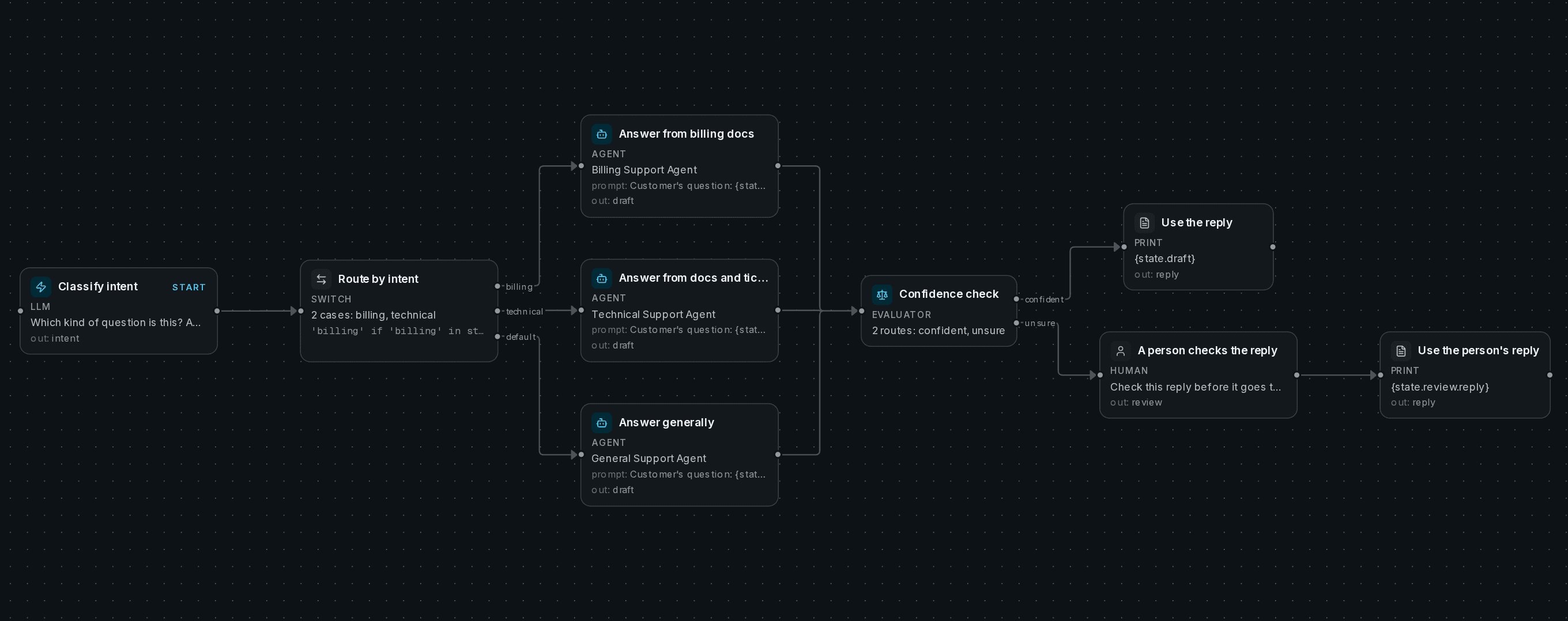
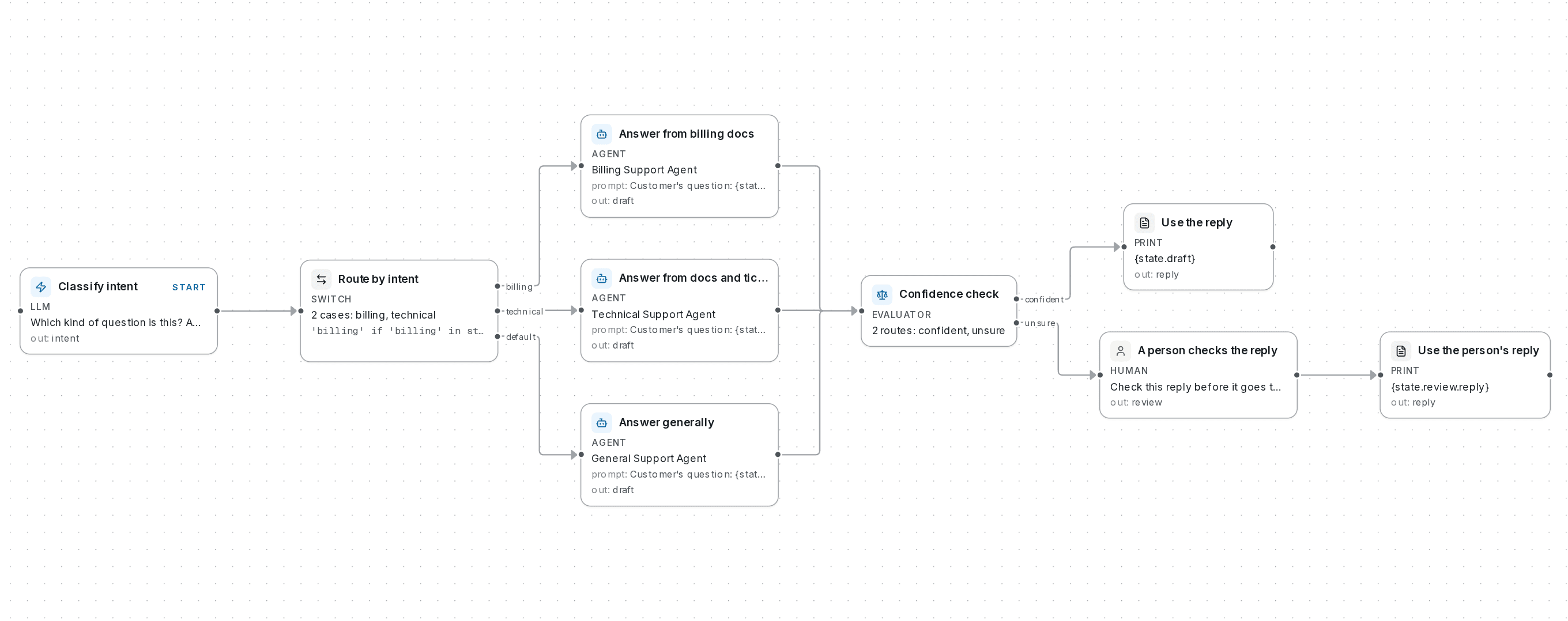
The workflow in the editor, captured from the open-source app.
- Steps
- 9
- Agents
- 3
- Where a person answers
- 1
- Models
- Yours to choose, per step: a small one for sorting and checks, a strong one where judgment matters
- Stops at
- Its turn and time limits; on Cloud, also your plan’s limit
The workflow
What it solves, and how it runs.
The problem
A support bot that invents a refund policy is worse than no bot. The useful part isn’t the answer, it’s knowing when to stop: the easy questions get answered at once, and the hard ones reach a person.
Why a fixed path matters here
The hand-off is a step in the workflow, not a hope in a prompt. The check is told to send refunds and account changes to a person, and that route is drawn where you can see it.
How it runs
- 1A question comes in, from your help desk through the API or pasted in by a teammate
- 2A small model sorts it: billing, technical or anything else
- 3The agent for that kind of question answers from your help articles and names the one it used
- 4A check decides whether the reply is grounded and safe to send as it is
- 5If it isn’t, a person reads the draft and writes or approves the reply, and that becomes the answer
Run it
On our cloud, or on your servers.
On SynapseOrch Cloud
The closest template:
- Inbox triageClassify an incoming message, escalate the urgent ones, draft the reply.
Or describe this workflow to Build with AI, and approve the plan it drafts.
On your own servers
customer-support-agent.bundle.json holds the agents and the workflow together. Import it from Settings → Import / Export in a self-hosted install, add your own connections, and run it.
It needs
- Your help articles as files in the vault, in a folder named support
- A model for the agents, from any provider you set up
More
Other workflows worth a look
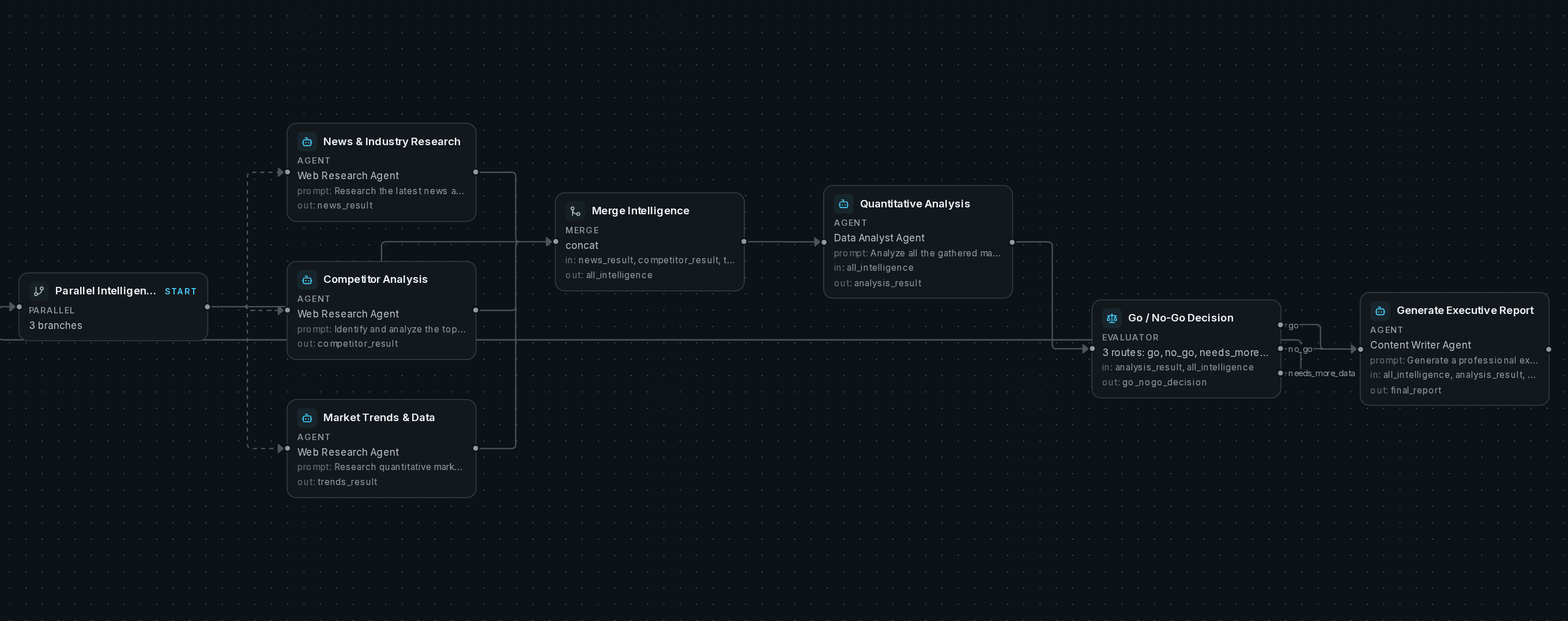
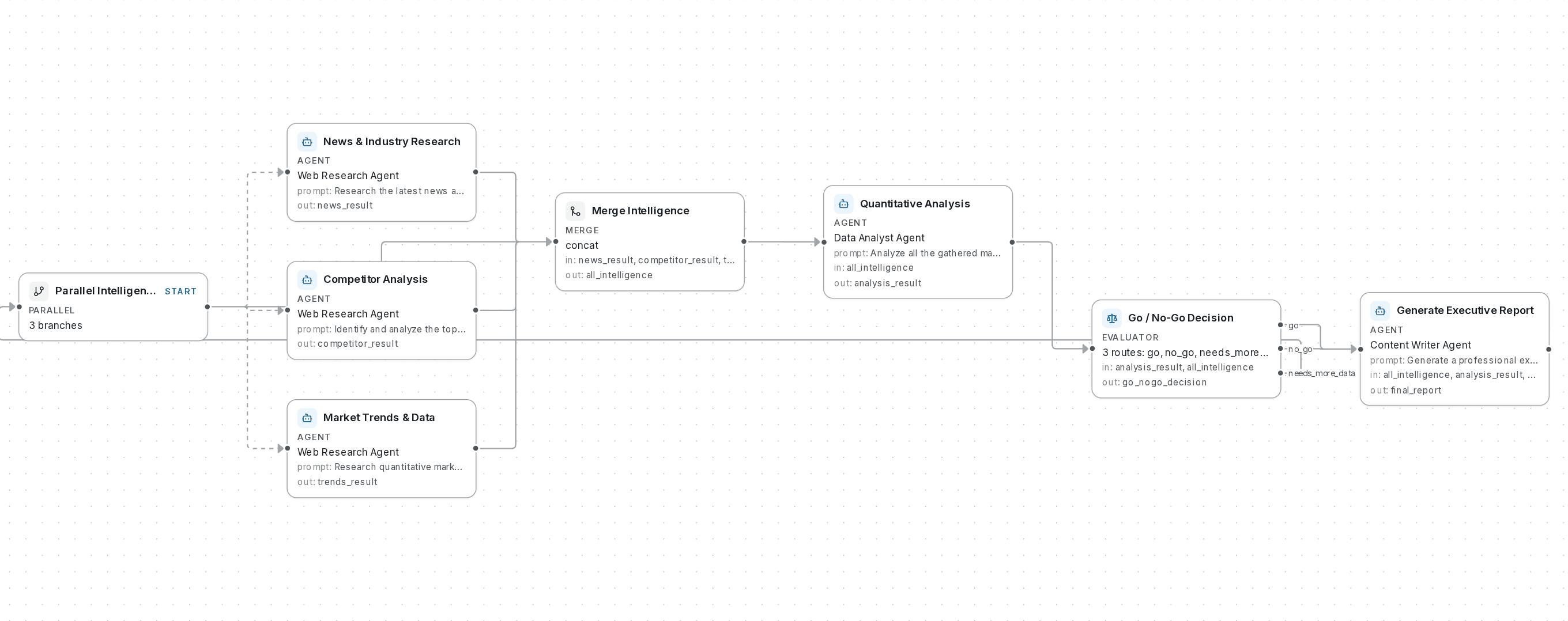
Market and competitor reports
A report on your market with the same sections every time: news, competitors and numbers gathered in parallel, scored, and written up with a clear go / no-go.
Researched articles
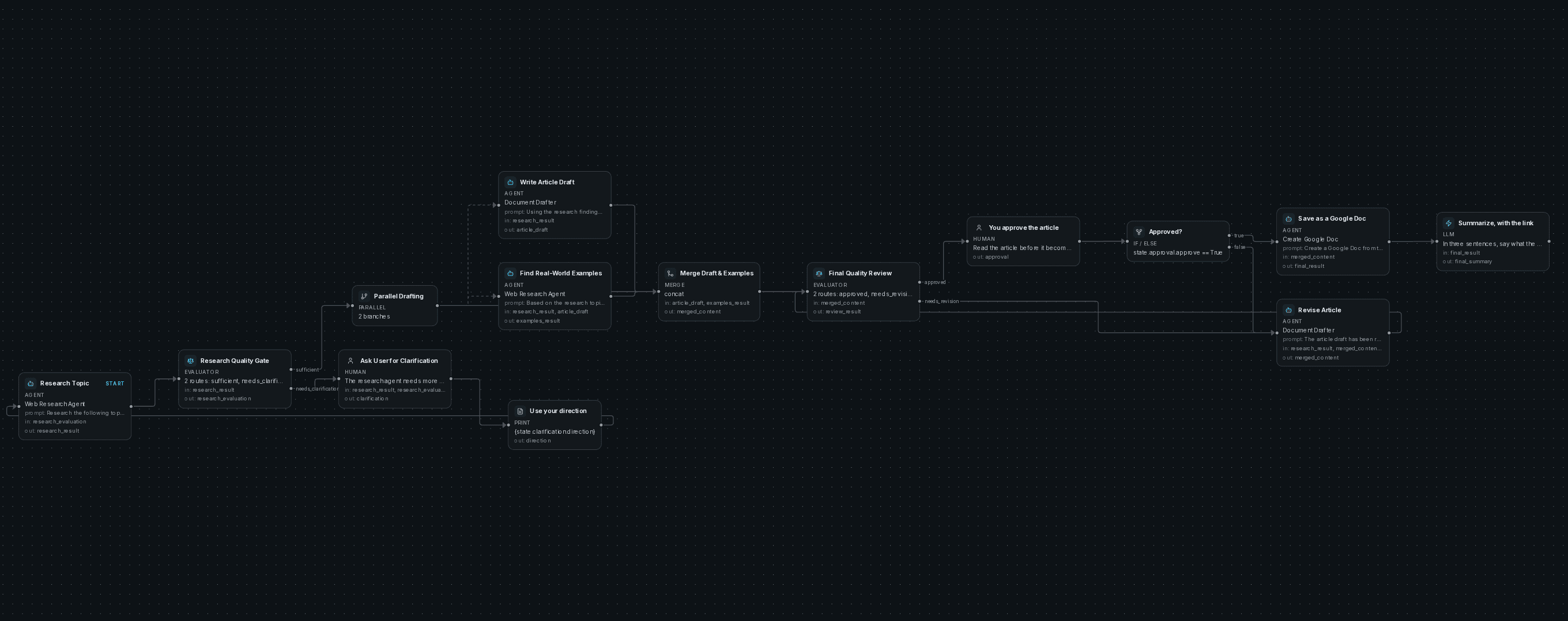
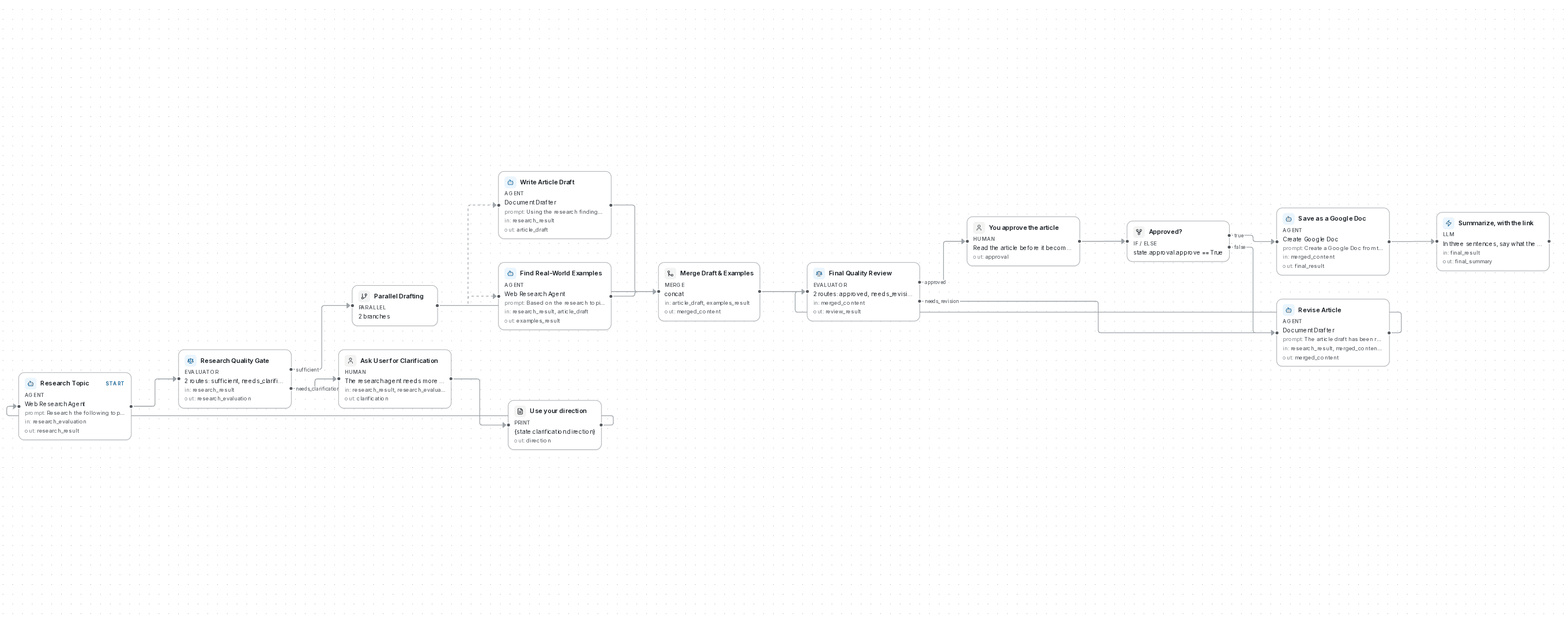
Articles drafted from real sources and checked until every claim is cited, then held for your approval before they’re saved as a Google Doc.
Research briefs
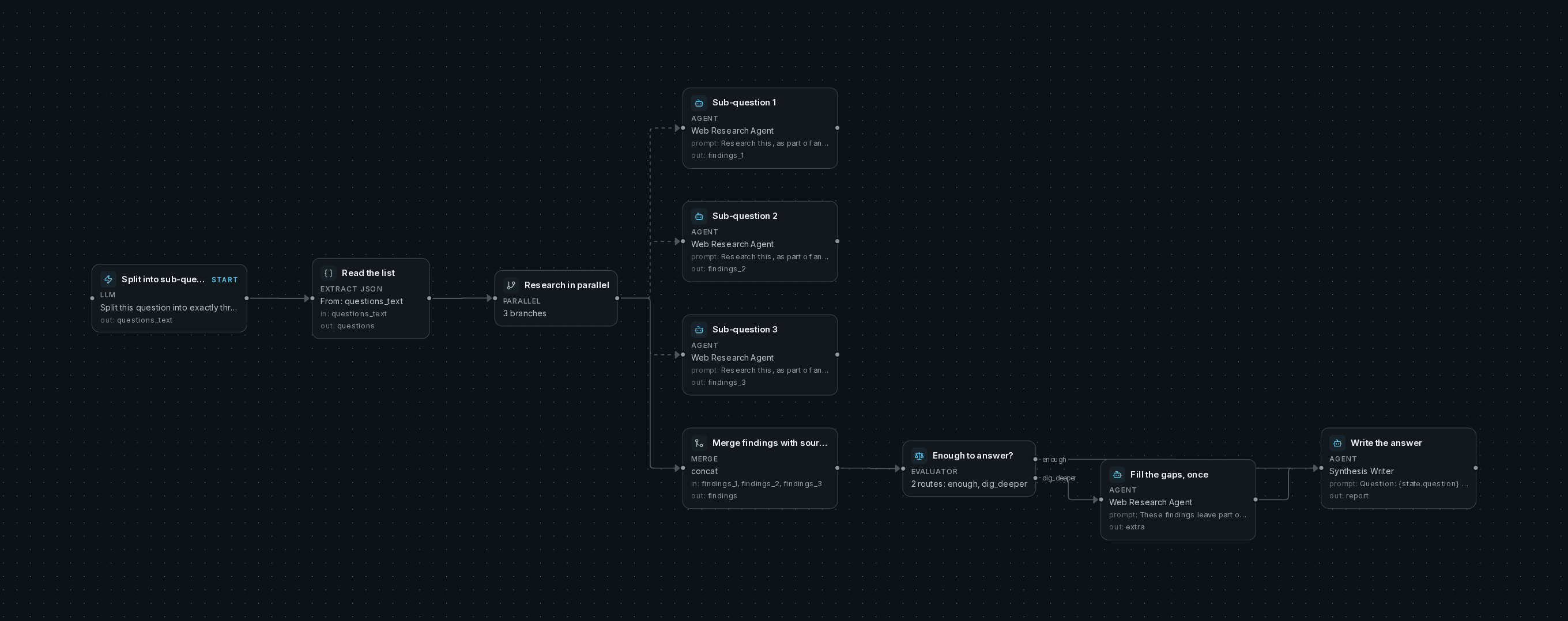
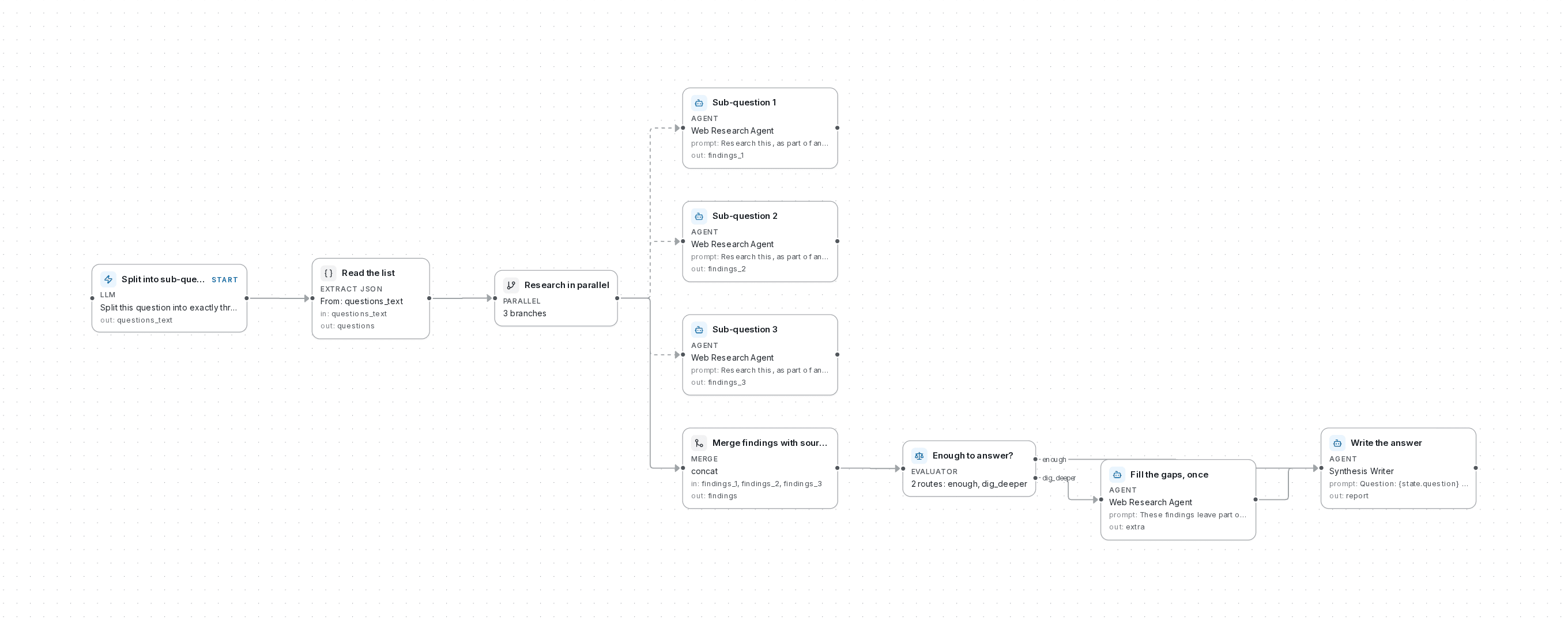
A question split into three parts and researched in parallel, with one pass to fill the gaps, then one written answer with its sources, saved to your files.
Two ways to run it
Let us run it, with nothing to install and no API key needed. Or run it on your own servers, free and open source.
Free plan, no card needed.